Carbon Plate Running Shoes: Benefits for Running and Training
What are the potential benefits of carbon-plated running shoes? Explore stiffness, running economy, responsive cushioning and performance training.
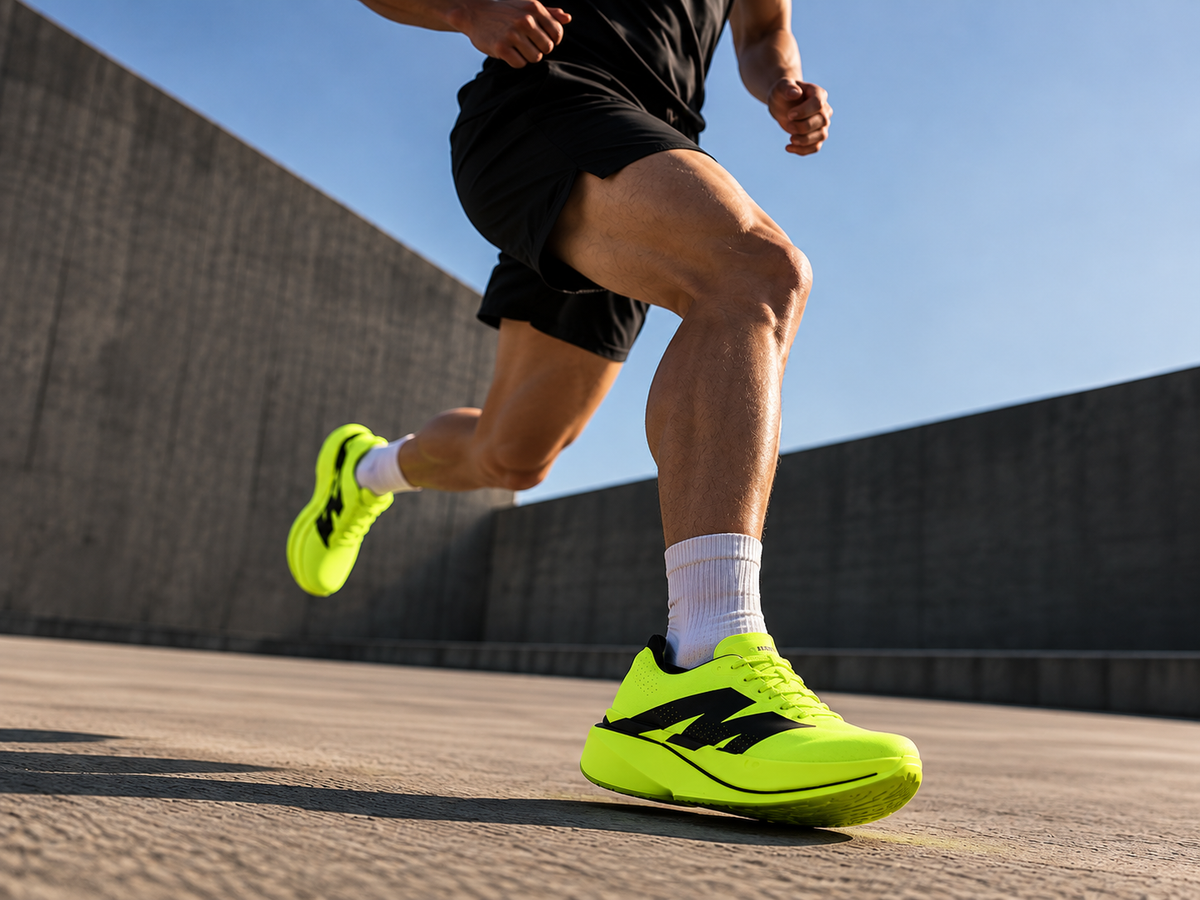
Carbon-plated running shoes have become one of the most discussed developments in modern running footwear.
But beyond race-day headlines lies a more useful question:
What benefits can carbon-plated footwear actually provide?
Answering that requires looking beyond the plate itself.
Modern performance footwear works as a system, combining stiffness, cushioning, geometry, traction and weight to influence the running experience.
1. Increased Longitudinal Bending Stiffness
The most direct mechanical role of a carbon-fiber plate is structural.
Placing a stiff plate within the midsole increases the shoe’s resistance to bending from heel to toe.
Researchers refer to this characteristic as longitudinal bending stiffness.
That increased stiffness changes the mechanical behavior of the shoe during movement.
However, it should not be interpreted as meaning that every runner will respond to every plated shoe in exactly the same way.
Shoe design and individual biomechanics both matter. For a step-by-step explanation of the technology, see how carbon plate running shoes work.
2. Potential Improvements in Running Economy
Running economy describes the metabolic demand required to maintain a given running speed.
Think of it loosely as how much physiological energy is required to maintain a particular pace.
This is one of the areas where advanced footwear has attracted considerable research.
A 2026 systematic review and meta-analysis of crossover trials comparing plated and non-plated footwear found statistically significant reductions across several measures of metabolic demand.
When expressed as percentage changes, the pooled results corresponded to approximately a 2–3% reduction in metabolic demand during submaximal running.
This does not mean:
Carbon plate = guaranteed 3% faster.
The study examined metabolic outcomes under specific research conditions.
Actual performance depends on many factors.
The researchers also emphasized that other advanced footwear characteristics may contribute to the observed effect.
3. A Responsive Running Experience
Performance footwear is not simply about stiffness.
The sensation runners often describe as responsive is influenced by the relationship between:
- midsole material
- shoe geometry
- structural components
- overall construction
A responsive midsole is loaded and unloaded through each stride.
When combined with a relatively stiff structural element and purposeful geometry, the resulting ride can feel distinctly different from a conventional flexible trainer.
This is why comparing shoes based solely on whether they contain carbon can be misleading.
Two carbon-plated shoes can behave very differently.
4. Structural Performance Without Excessive Mass
Weight is an important design consideration in running footwear.
Every stride involves moving the shoe along with the foot.
Carbon fiber is attractive to footwear designers because it can provide substantial structural stiffness without requiring a particularly heavy component.
But the relevant variable for the runner is the complete shoe.
A light plate does not automatically make the complete shoe lightweight.
Upper materials, foam volume, outsole construction and other components all contribute to total mass.
5. Running and Performance Training
Carbon-plated footwear first became widely recognized through racing.
The category has since expanded.
Different plated shoes may be designed for:
- race day
- tempo sessions
- intervals
- long runs
- performance training
This creates an important distinction.
The question should not simply be:
Does the shoe have a carbon plate?
A better question is:
What was this particular shoe designed to do?
Can You Train in Carbon-Plated Running Shoes?
Carbon-plated footwear can be used in training depending on the specific shoe, the runner and the session.
Some runners use plated footwear for:
- tempo runs
- interval sessions
- race-pace workouts
- long runs
- competition
Other runners prefer to rotate between different types of shoes.
Long-term research around advanced footwear continues to develop, so broad claims about what every runner should wear for every training session would be inappropriate.
Footwear selection should consider:
- comfort
- fit
- training demands
- surface
- pace
- experience
- individual preference
If you are weighing plated shoes against a traditional trainer, our guide to carbon-plated and traditional running shoes lays out the differences.
What About Injury Prevention?
This requires particular caution.
A carbon plate should not automatically be described as injury-prevention technology.
A 2026 systematic review and meta-analysis examining biomechanics found no consistent differences across several lower-limb outcomes when carbon-plated shoes were compared with non-plated footwear.
The authors characterized the biomechanical adaptations as relatively subtle.
Footwear choice should therefore consider fit, comfort, training load and individual biomechanics.
Who Might Be Interested in Carbon-Plated Shoes?
Carbon-plated footwear is not exclusively relevant to elite marathon runners.
Recreational runners may also be interested in the characteristics of advanced footwear.
The potential value depends on factors including:
- running pace
- distance
- training type
- comfort preference
- footwear experience
- specific shoe design
A recreational runner preparing for a first 10K and an elite marathon runner have different needs.
The technology may overlap.
The use case may not.
The Real Benefit Is the System
Carbon fiber gets much of the attention.
But modern performance footwear is the result of multiple design elements working together:
Structure
+ Responsive cushioning
+ Geometry
+ Lightweight design
+ Traction
That is a better framework for understanding advanced running footwear.
Not as a plate hidden inside a shoe.
But as an integrated footwear system. It is the thinking behind AURORO MOVE.
FIND YOUR MOVE.
Explore AURORO MOVE and discover the design behind our approach to movement.
Continue reading
Shoe Guide
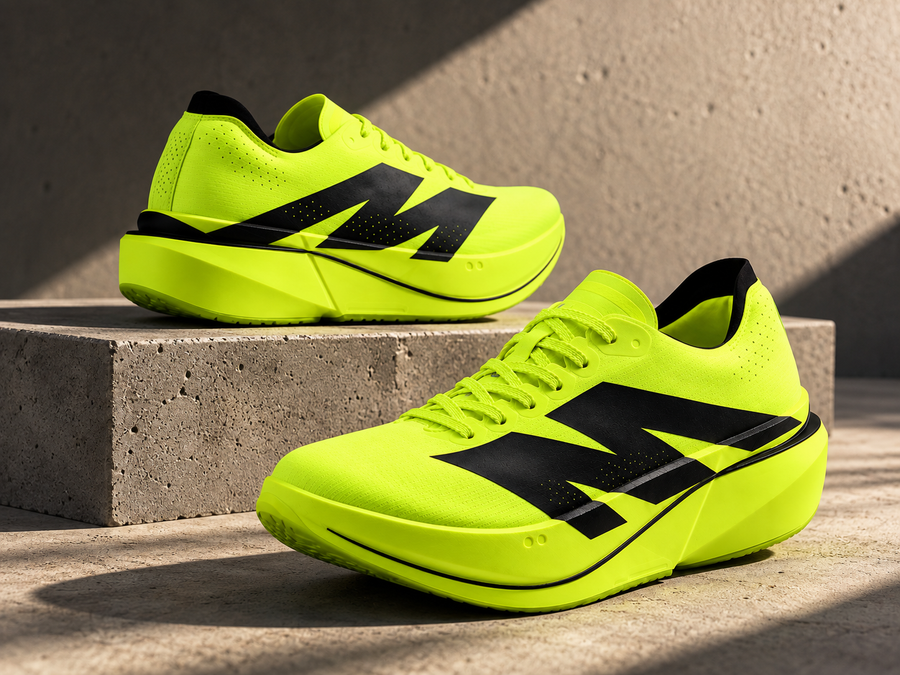
Carbon Plate vs. Regular Running Shoes: What's the Difference?
Carbon plate or traditional running shoe? Compare stiffness, cushioning, responsiveness and intended use to understand the key differences.
Read the article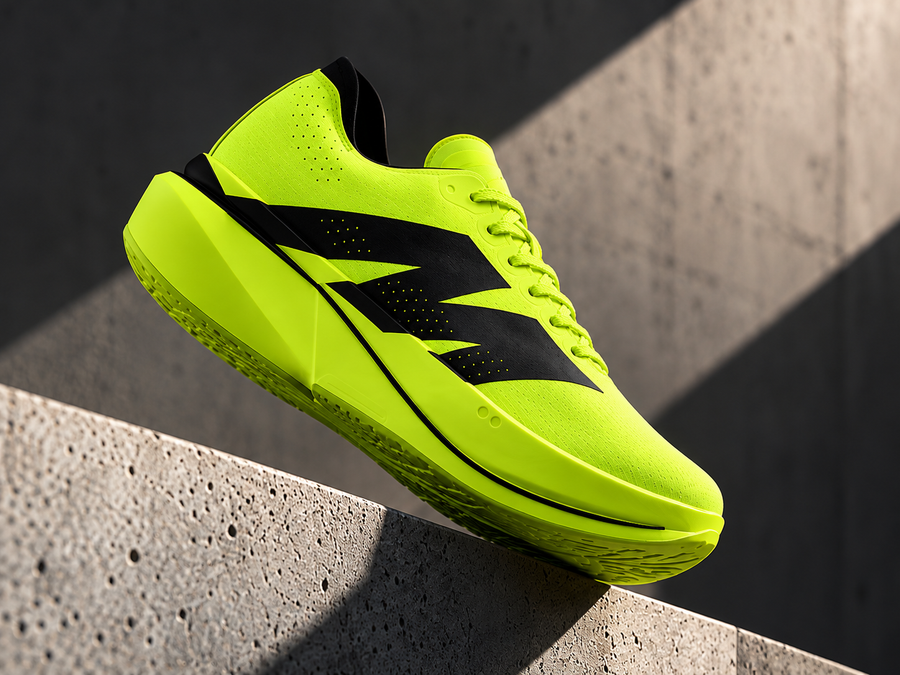
Carbon Technology
What Are Carbon Plate Running Shoes and How Do They Work?
Carbon plate running shoes combine structural stiffness, responsive cushioning and modern shoe geometry. Learn how the technology works and why the complete footwear system matters.
Read the articleSources & further reading
- Kobayashi EN, et al. Metabolic effects of carbon-plated running shoes: a systematic review and meta-analysis. Frontiers in Sports and Active Living. 2026. DOI: 10.3389/fspor.2025.1710224. pubmed.ncbi.nlm.nih.gov/41586014
- Giachetti Martin S, et al. Carbon plates in running shoes biomechanics: a systematic review and meta-analysis. Frontiers in Sports and Active Living. 2026. DOI: 10.3389/fspor.2026.1764338. pubmed.ncbi.nlm.nih.gov/42293993
- Xu L, Wang Y, Wen X. The role of footwear in improving running economy: a systematic review with meta-analysis of controlled trials. Scientific Reports. 2025. PMID: 39893208. pubmed.ncbi.nlm.nih.gov/39893208