What Are Carbon Plate Running Shoes and How Do They Work?
Carbon plate running shoes combine structural stiffness, responsive cushioning and modern shoe geometry. Learn how the technology works and why the complete footwear system matters.
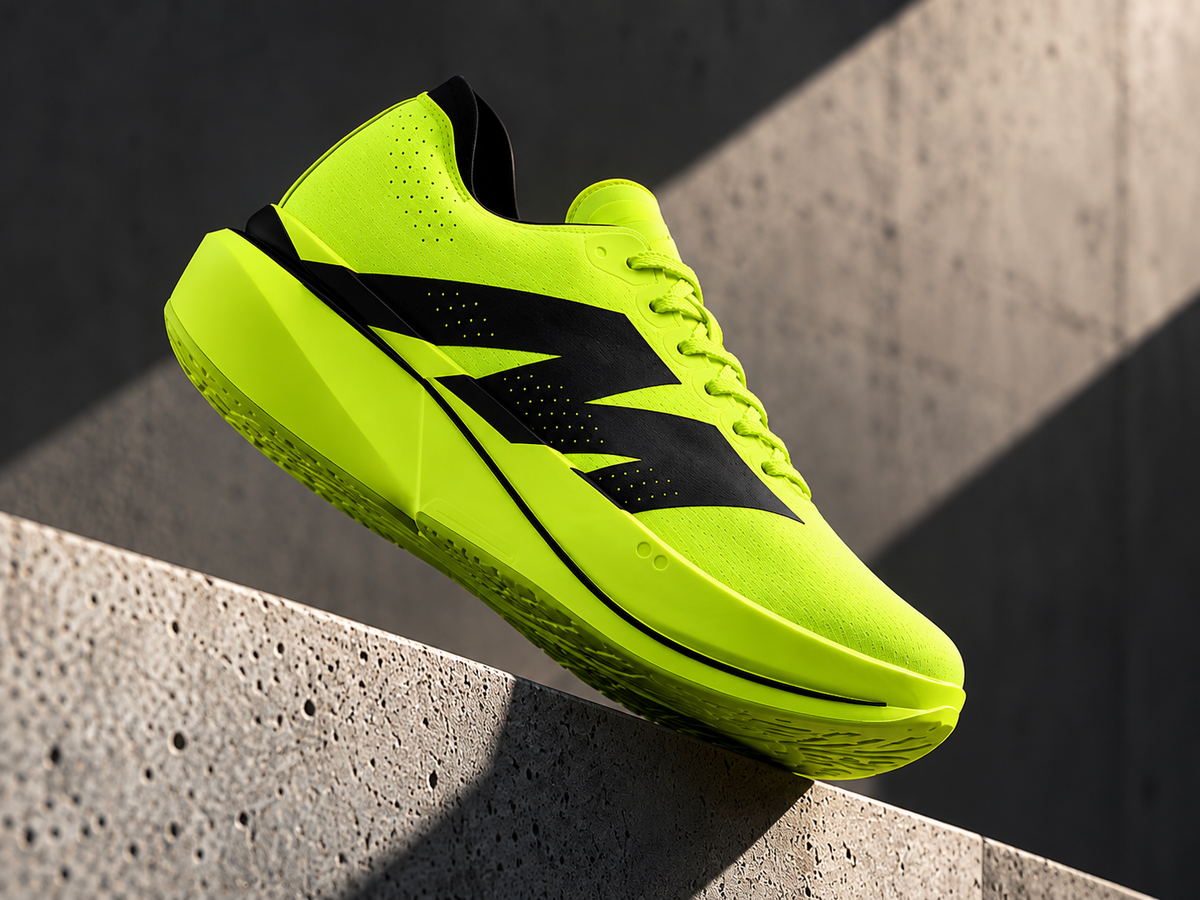
Running shoes have changed dramatically in recent years.
One of the biggest developments has been the rise of carbon plate running shoes—footwear that combines lightweight materials, responsive cushioning and a stiff plate embedded within the midsole.
Once associated mainly with elite road racing, carbon-plated footwear has become increasingly visible among everyday runners, training shoes and performance-focused footwear.
But what does the carbon plate actually do?
And perhaps more importantly, is the plate itself responsible for the way these shoes feel?
The answer is more interesting than it may seem.
What Is a Carbon Plate Running Shoe?
A carbon plate running shoe contains a relatively stiff carbon-fiber plate positioned within the midsole.
Unlike the outsole, which contacts the ground, or the upper, which surrounds the foot, the plate is integrated into the structure underneath the foot.
Its purpose is not simply to make the shoe harder.
Instead, the plate changes the shoe’s longitudinal bending stiffness—essentially how easily the shoe bends from heel to toe.
Carbon fiber is particularly suited to this application because it can provide substantial stiffness without requiring an excessively heavy structural component.
That is one reason the material has become closely associated with modern performance running footwear.
The Carbon Plate Is Only Part of the System
It is tempting to think of carbon-plated shoes as:
Regular running shoe + carbon plate = faster shoe.
Modern footwear engineering is considerably more complicated.
Advanced running shoes can combine several elements:
Carbon-Fiber Plate
Provides structural stiffness within the midsole.
Responsive Foam
Compresses and rebounds as the shoe is loaded and unloaded during movement.
Midsole Geometry
Influences how the shoe transitions from landing toward toe-off.
Overall Weight
The total mass of the shoe is another important design variable.
Outsole Design
Provides the traction needed where the shoe meets the ground.
These components interact.
Scientific reviews therefore caution against attributing the complete effect of advanced footwear to the carbon plate alone.
The complete shoe matters.
It is the same idea behind AURORO MOVE: performance footwear works best when its parts are considered together, not one material at a time.
What Does the Carbon Plate Actually Do?
One of the clearest mechanical effects of a carbon-fiber plate is increasing the shoe’s resistance to bending along its length.
During running, the foot and shoe progress through a sequence from initial contact toward toe-off.
A stiff plate changes how the shoe bends during that process.
Researchers study this characteristic as longitudinal bending stiffness.
However, this does not mean every carbon-plated shoe produces the same biomechanical response.
A 2026 systematic review and meta-analysis comparing carbon-plated and non-carbon-plated running shoes found that several measured biomechanical outcomes did not differ consistently between the two categories.
The researchers concluded that biomechanical adaptations appear to be relatively subtle rather than representing a universal redistribution of lower-limb mechanics.
That distinction matters.
The carbon plate should not be imagined as a simple spring that independently launches the runner forward.
It is one component of a complete footwear system.
Why Is Responsive Foam Important?
Imagine placing a carbon plate inside an extremely thin, hard shoe.
You would have stiffness—but not necessarily the characteristics associated with modern advanced running footwear.
This is why foam matters.
Many contemporary carbon-plated running shoes combine structural stiffness with a compliant and resilient midsole.
During each stride, the midsole is loaded and then unloaded as the runner moves forward.
The interaction between:
Foam + plate + geometry
is central to modern advanced footwear design.
The plate contributes structure.
The foam contributes cushioning and rebound characteristics.
The geometry influences how those elements interact through the stride.
Do Carbon Plate Running Shoes Improve Running Economy?
Running economy describes the metabolic demand associated with maintaining a given running speed.
Research suggests that carbon-plated footwear can reduce that demand under certain controlled running conditions.
A systematic review and meta-analysis published in 2026 analyzed crossover trials involving healthy adults.
Across the included outcomes, plated footwear was associated with an average reduction in metabolic demand of approximately 2–3% during submaximal running.
This does not mean that every runner automatically becomes 2–3% faster.
Running economy and actual race performance are not the same measurement.
The researchers also emphasized that other characteristics of advanced footwear—including foam, geometry, shoe mass and other design elements—may contribute to the observed effects.
Therefore, the responsible conclusion is:
The complete footwear system matters.
If you want to go deeper on what the research suggests, read our overview of the potential benefits of carbon plate running shoes.
Are Carbon-Plated Shoes Only for Racing?
Carbon plates became widely known through racing footwear.
But plated footwear is no longer limited to one type of use.
Different models may be designed for:
- racing
- faster training
- tempo sessions
- long runs
- performance-focused training
The important distinction is that simply knowing a shoe contains a carbon plate does not tell you exactly how it will behave.
Plate geometry, foam, outsole, fit, weight and overall construction all influence the experience.
Should Every Runner Use a Carbon Plate?
Not necessarily.
Runners differ.
Running speed, body mass, foot strike, training history, preferred cushioning, comfort and intended use can all influence how a shoe feels.
Carbon-plated footwear should therefore be understood as a category of running technology—not as a universal requirement.
The best footwear choice depends on the runner and the intended activity. To see how the two categories compare, read carbon plate vs. regular running shoes.
The Evolution of Performance Footwear
Carbon fiber has changed the conversation around running shoes.
But the larger innovation is not simply one material.
It is the idea of engineering the entire shoe as an interconnected system:
Structure.
Cushioning.
Geometry.
Traction.
Weight.
Understanding how these components work together provides a better way to evaluate modern performance footwear than focusing on the plate alone.
FIND YOUR MOVE.
Explore AURORO MOVE and discover the design behind our approach to movement.
Continue reading
Shoe Guide
Carbon Plate vs. Regular Running Shoes: What's the Difference?
Carbon plate or traditional running shoe? Compare stiffness, cushioning, responsiveness and intended use to understand the key differences.
Read the article
Performance
Carbon Plate Running Shoes: Benefits for Running and Training
What are the potential benefits of carbon-plated running shoes? Explore stiffness, running economy, responsive cushioning and performance training.
Read the articleSources & further reading
- Kobayashi EN, et al. Metabolic effects of carbon-plated running shoes: a systematic review and meta-analysis. Frontiers in Sports and Active Living. 2026. DOI: 10.3389/fspor.2025.1710224. pubmed.ncbi.nlm.nih.gov/41586014
- Giachetti Martin S, et al. Carbon plates in running shoes biomechanics: a systematic review and meta-analysis. Frontiers in Sports and Active Living. 2026. DOI: 10.3389/fspor.2026.1764338. pubmed.ncbi.nlm.nih.gov/42293993