Carbon Plate vs. Regular Running Shoes: What's the Difference?
Carbon plate or traditional running shoe? Compare stiffness, cushioning, responsiveness and intended use to understand the key differences.
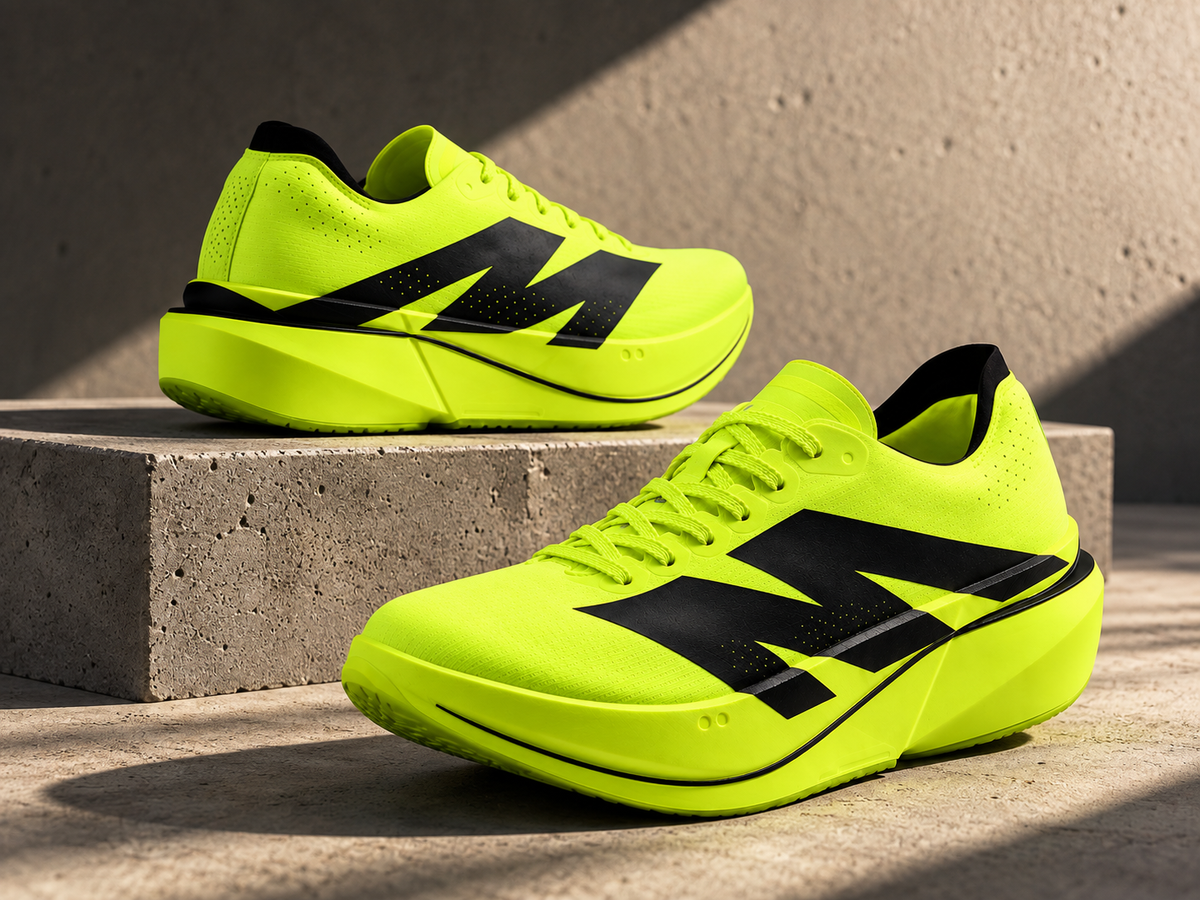
At first glance, the difference seems obvious.
One running shoe contains a carbon plate.
The other does not.
But that simple distinction does not fully explain why the two categories can feel different underfoot.
The more useful comparison involves:
- structure
- foam
- geometry
- flexibility
- weight
- intended use
Let’s break it down.
Carbon Plate vs. Regular Running Shoes at a Glance
| Feature | Carbon-plated running shoes | Traditional running shoes |
|---|---|---|
| Structure | Generally higher longitudinal stiffness | Generally more flexible |
| Midsole | Often combined with performance-oriented responsive foams | Wide range of cushioning systems |
| Ride | Can feel more structured depending on design | Varies widely from soft to responsive |
| Typical use | Racing, speed work and performance training depending on model | Daily running, easy running and general training depending on model |
| Flexibility | Generally lower longitudinal flexibility | Generally greater flexibility |
| Price | Often positioned at premium price points | Available across a broad price range |
| Best choice | Depends on runner and intended use | Depends on runner and intended use |
The Biggest Difference: Stiffness
Take many conventional running shoes and bend the forefoot toward the heel.
They often flex relatively easily.
Perform the same movement with a carbon-plated performance shoe and there is generally greater resistance.
The embedded plate contributes to this increased longitudinal bending stiffness.
That changes the mechanical characteristics of the shoe.
However, research does not indicate one universal biomechanical response across all joints, runners and shoe designs.
A 2026 meta-analysis found no consistent differences in several measured joint-power and leg-stiffness outcomes between carbon-plated and non-plated footwear. For more on the mechanics, see how carbon-fiber plates work.
Cushioning Is Equally Important
This is where simplistic comparisons can become misleading.
A carbon-plated shoe is not necessarily a hard shoe.
Many advanced performance models combine structural stiffness with compliant cushioning.
This can create an interesting relationship between:
Cushioning + structure.
Traditional running shoes can also provide highly responsive cushioning.
The major distinction is that they do not use a carbon-fiber plate to influence longitudinal stiffness in the same way.
Which Feels Faster?
Many runners associate carbon-plated performance footwear with a more performance-oriented ride.
Research provides evidence that advanced plated footwear can reduce metabolic demand during submaximal running.
A 2026 meta-analysis found average reductions of approximately 2–3% across measured metabolic outcomes.
However, there is meaningful variation between:
- runners
- speeds
- shoe designs
- study conditions
A shoe does not independently create speed.
Training, fitness, biomechanics, conditions and complete footwear design still matter. We summarize the evidence in our guide to the potential benefits of carbon-plated running shoes.
Which Is Better for Daily Training?
There is no universal answer.
Traditional daily trainers are often designed around characteristics such as:
- comfort
- durability
- versatility
- repeated mileage
Carbon-plated performance shoes have historically been strongly associated with:
- racing
- speed
- responsiveness
- performance-focused sessions
But the distinction between categories has become less rigid as footwear design has evolved.
Some plated shoes are intended for more regular training.
Others remain highly specialized.
Instead of asking:
Are carbon shoes good for training?
Ask:
Was this particular carbon-plated shoe designed for the kind of training I do?
What About Walking and Everyday Use?
Being able to walk in a carbon-plated shoe does not mean every racing shoe is optimized for walking.
Some highly specialized performance designs use aggressive geometries intended primarily for running.
Other footwear may prioritize broader versatility.
For everyday use, consider:
- comfort
- stability
- outsole durability
- fit
- walking feel
- geometry
The presence of a carbon plate alone does not answer those questions.
Are Carbon Plate Running Shoes Worth It?
That depends on what the runner expects from the shoe.
Someone interested in performance-oriented running, faster sessions or racing may value characteristics commonly associated with plated footwear.
Someone prioritizing flexibility or conventional daily-training characteristics may prefer a traditional trainer.
Many runners use different footwear for different purposes.
There is no requirement that one category replace the other.
Don’t Buy the Plate. Evaluate the Shoe.
Perhaps the most important lesson is:
A carbon plate is a component — not a guarantee.
Evaluate the complete shoe.
Fit
Does the shoe fit the foot correctly and comfortably?
Cushioning
Does the midsole feel appropriate for the intended activity?
Geometry
Does the transition through the stride feel appropriate?
Weight
Does the complete shoe feel appropriate for its purpose?
Traction
Does the outsole suit the intended surface?
Structure
Does the level of stiffness suit the runner?
Only then should the presence of carbon be considered in context.
A New Kind of Versatility
One interesting direction in performance footwear is the application of performance-oriented design principles beyond a single race-day moment.
Running.
Training.
Walking.
Travel.
Daily movement.
Different shoes will prioritize these activities differently. AURORO MOVE is designed for the run, the gym and everyday movement.
The key is understanding the complete design rather than buying footwear based on one material alone.
FIND YOUR MOVE.
Explore AURORO MOVE and discover the design behind our approach to movement.
Continue reading

Performance
Carbon Plate Running Shoes: Benefits for Running and Training
What are the potential benefits of carbon-plated running shoes? Explore stiffness, running economy, responsive cushioning and performance training.
Read the article
Carbon Technology
What Are Carbon Plate Running Shoes and How Do They Work?
Carbon plate running shoes combine structural stiffness, responsive cushioning and modern shoe geometry. Learn how the technology works and why the complete footwear system matters.
Read the articleSources & further reading
- Kobayashi EN, et al. Metabolic effects of carbon-plated running shoes: a systematic review and meta-analysis. Frontiers in Sports and Active Living. 2026. DOI: 10.3389/fspor.2025.1710224. pubmed.ncbi.nlm.nih.gov/41586014
- Giachetti Martin S, et al. Carbon plates in running shoes biomechanics: a systematic review and meta-analysis. Frontiers in Sports and Active Living. 2026. DOI: 10.3389/fspor.2026.1764338. pubmed.ncbi.nlm.nih.gov/42293993
- Xu L, Wang Y, Wen X. The role of footwear in improving running economy: a systematic review with meta-analysis of controlled trials. Scientific Reports. 2025. PMID: 39893208. pubmed.ncbi.nlm.nih.gov/39893208